

The Monoculture Trap: What Small Farms Can Teach Us About Diversity
June 8, 2026
A Curious Discovery: What a Wild Vine Taught Me About Risk Management
June 8, 2026The Monoculture Trap: What Small Farms Can Teach Us About Diversity
June 8, 2026A Curious Discovery: What a Wild Vine Taught Me About Risk Management
June 8, 2026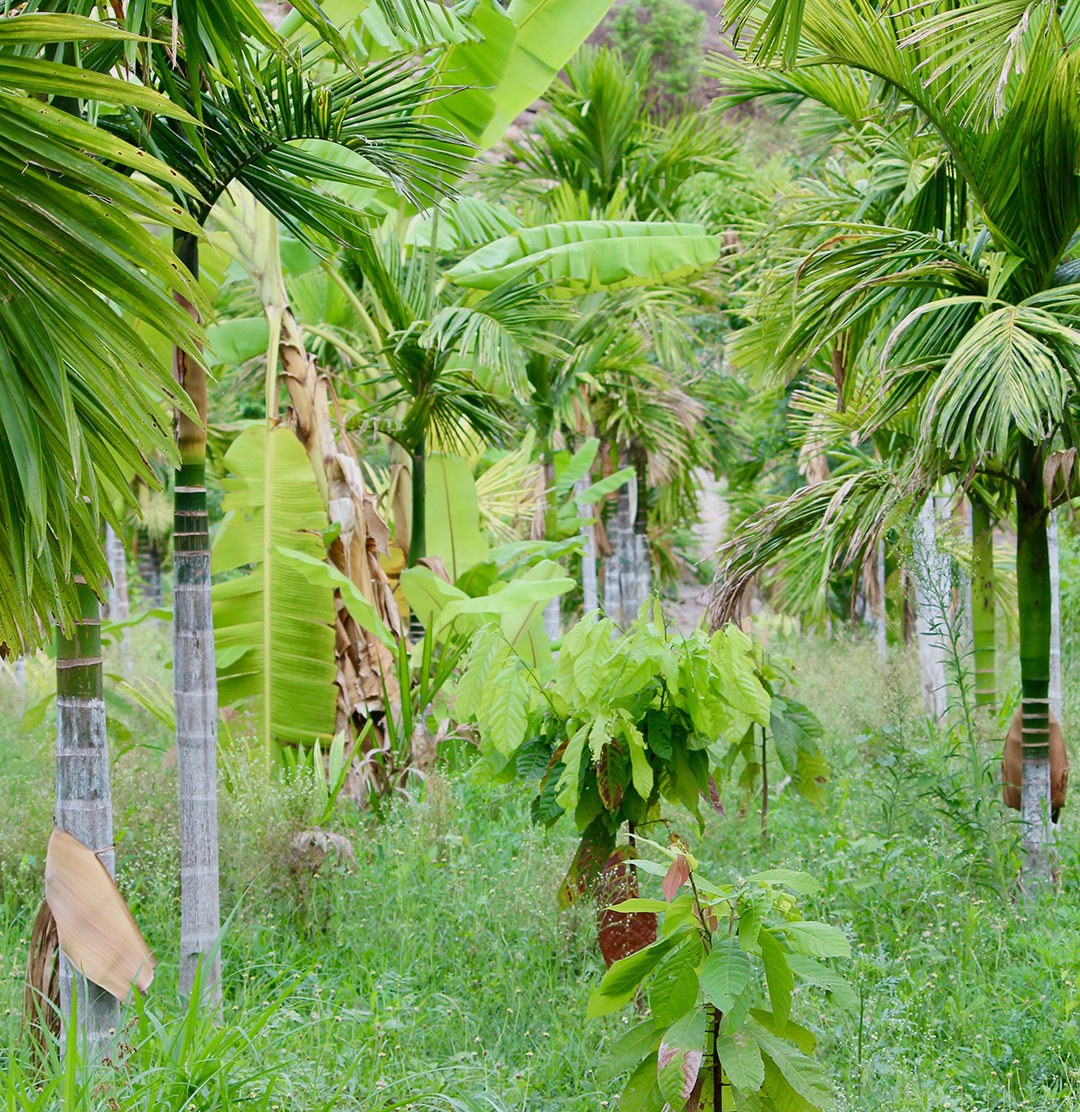
The Power of Acclimatisation: What Dying Cocoa Saplings Taught Us About Moving On
Four years ago, we decided to plant cocoa in between our existing areca nut trees. On paper, it’s an established practice to make efficient use of land. But for me, the motive was deeper: cocoa plants create a gentle microclimate beneath the canopy, which is absolutely crucial in dry lands like ours.
What followed, however, was a brutal four-year masterclass in survival.
Our first year, we brought in over 500 saplings from coastal Karnataka and planted them right as the monsoon started. But farming depends entirely on the unpredictable rhythm of rain. The monsoon failed, a year-long dry spell set in, and except for a tiny handful, almost every single plant died.
The next year, trusting the weather predictions, we tried again. We scaled down to 200 plants and bought them from a nursery closer to our region, hoping they were slightly more acclimatised. This time, it wasn't the weather that got them—a sudden worm infestation wiped out most of the batch.
By the third year, we were battered but determined to try one last time. We changed our strategy completely. We sourced saplings from a tiny nursery very close to our farm. These plants had already been breathing our air and sitting in our local weather for over a year.
That local connection changed everything. Today, most of those third-year saplings are pushing through their second summer and growing vigorously.
Looking back at the losses, the biggest surprise wasn’t just the resilience required to keep going—it was the profound importance of local acclimatisation. When a plant is given the time to become comfortable in its immediate environment, it stops fighting to survive and finally starts to thrive.
Watching these saplings finally take root made me reflect on how we handle change as humans.
When we pack up our lives to move to a new city, start a new job, or join a completely different company culture, we often expect ourselves to perform instantly. We demand immediate growth from day one. But we forget that, just like those coastal saplings, we have been uprooted from an ecosystem we knew and dropped into an entirely new climate.
If we find ourselves struggling after a big transition, we need to give ourselves some grace. We aren't failing; we are simply adjusting to the new soil. True growth cannot happen while we are still fighting the shock of the shift. It takes time to acclimatise, to absorb the local culture, and to find our footing.
We cannot force the bloom until we have adapted to the climate. If we can be patient with our transitions, we will find that once we get comfortable in our new environment, we start growing again, too.