

The Caterpillar That Moved Toward the Poison
August 30, 2026
The Flower That Waited for Dark
September 27, 2026The Caterpillar That Moved Toward the Poison
August 30, 2026The Flower That Waited for Dark
September 27, 2026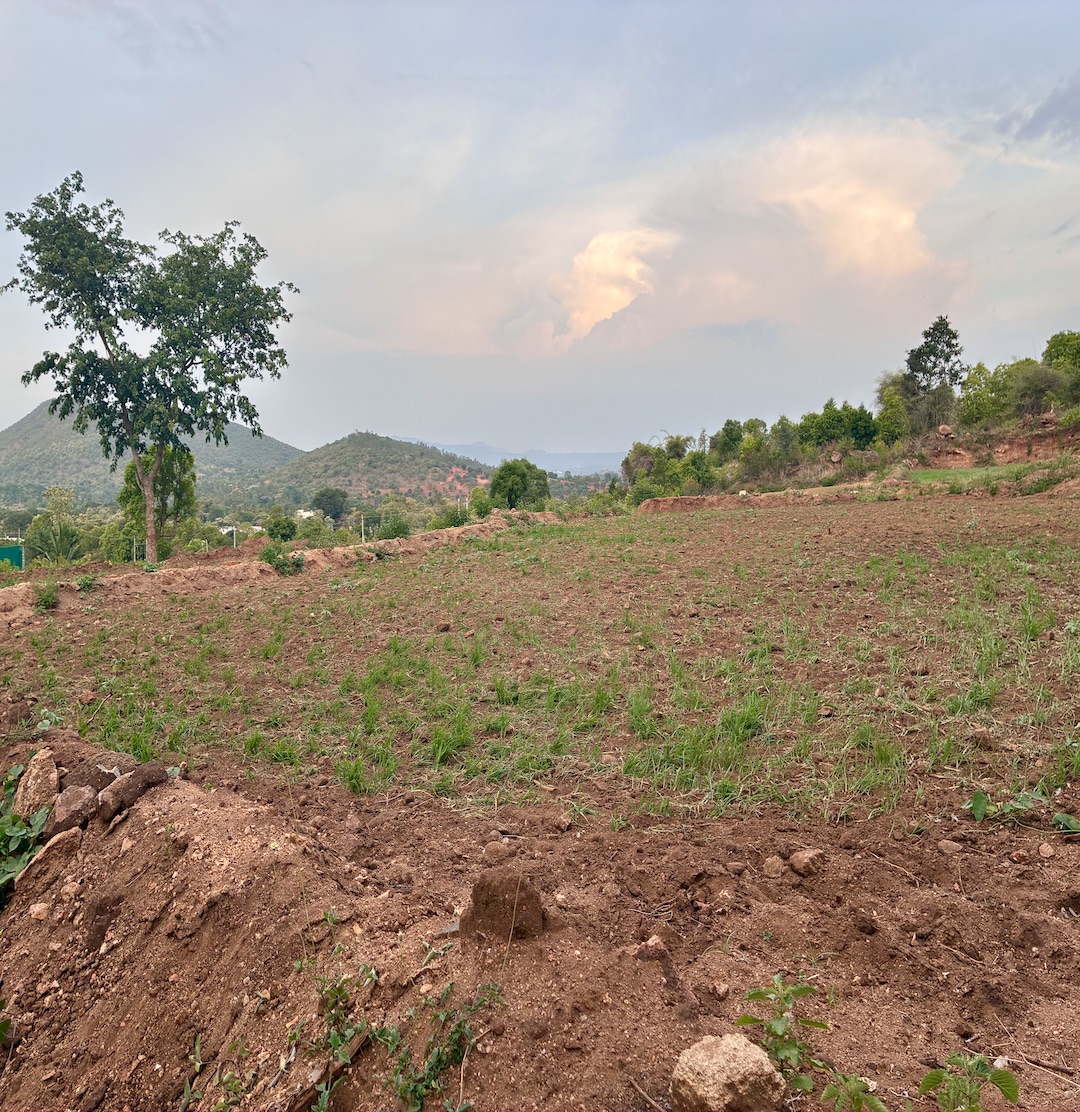
When Doing Everything Right Still Isn't Enough
By this time of year, the fields around our farm are usually a solid sheet of green — ragi, cowpea, pigeon pea, castor, turning sunlight into food, fodder, and oil for the months ahead. It's also the season farmers here worship Muneeshwara, the guardian deity believed to watch over the standing crop until harvest.
This year, the fields are bare except for rows of dried, curled seedlings — sprouted, then abandoned, waiting for a rain that never came.
Worth being precise about what happened. The rains were delayed. Farmers prepared their land early and waited, rather than sowing into dry soil. When it finally rained — moderately, not heavily — it was already the last realistic window for any harvest this year. Waiting further meant guaranteeing zero. So they sowed ragi for grain, cowpea and pigeon pea for pulses and fodder, castor for oil — a diversified bet across food, feed, and cash crop.
The rains didn't return in time. Ragi and pigeon pea, further along and less forgiving, dried out and were lost.
I keep returning to this because it breaks a story we tell ourselves about failure: that bad outcomes trace back to a bad decision — a corner cut, a risk taken carelessly. This wasn't that. The land was prepared on time. Waiting for real rain instead of gambling on dry soil was sound. Sowing the moment moderate rain arrived was the only rational move left. Two of the four crops failed anyway, because one variable nobody controls — the rain that comes after the rain — didn't cooperate.
Business has its own version of this. A launch timed to a narrowing market window. A hire made on the strongest candidate before a deadline that can't move. A bet on a geography just as early signals turn promising. Judged when made, these are good decisions — and sometimes whatever they depended on afterwards doesn't show up, no matter the foresight beforehand.
The lesson isn't about trying harder or reading signals better — sometimes there wasn't a better decision available. It's narrower: a sound decision and a good outcome aren't the same thing, and treating every failure as evidence of flawed judgement punishes good decisions for bad luck.
A hopeful thread still runs through this season, though. Cowpea and castor are hardier, with a longer window, and can still be saved if the retreating monsoon brings rain before it's too late. Farmers are now watching for winter rains, hoping for enough to raise a crop of horse gram — something productive from their fields this year. And next year, they'll prepare the land again, wait for the rains again, sow at the right window again. That's not blind optimism — it's the correct response to a world where the best decision available doesn't always come with a guarantee attached.