


The Power of Acclimatisation: What Dying Cocoa Saplings Taught Us About Moving On
June 8, 2026
Built from Local Soil: The Tier 2 Mindset That Metro Startups Are Missing
July 5, 2026The Power of Acclimatisation: What Dying Cocoa Saplings Taught Us About Moving On
June 8, 2026Built from Local Soil: The Tier 2 Mindset That Metro Startups Are Missing
July 5, 2026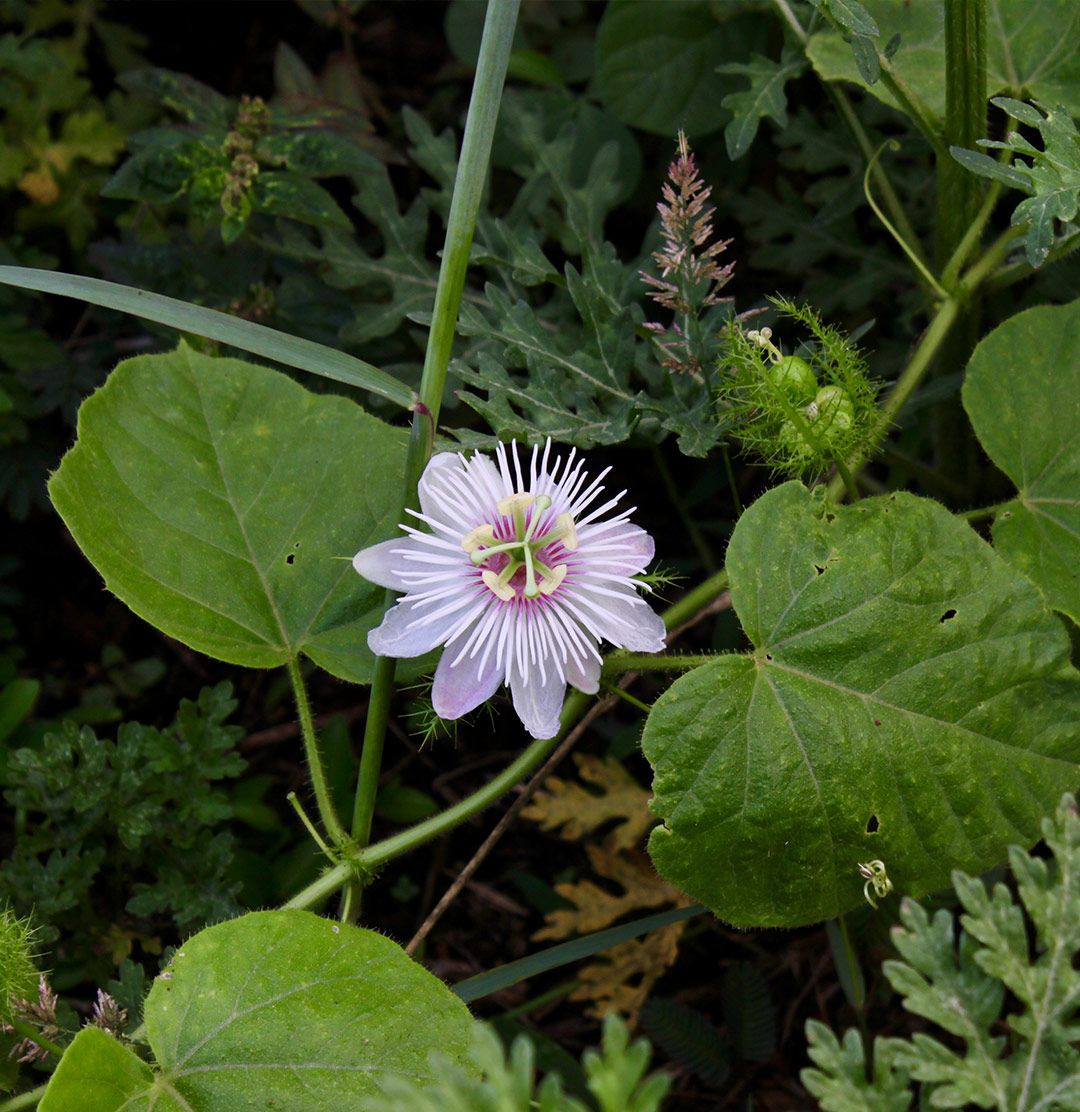
A Curious Discovery: What a Wild Vine Taught Me About Risk Management
I stumbled upon a strange, wild vine growing quietly along the edge of our farm plots the other day. It caught my eye because of its beautifully intricate, lilac-and-white flower. Curious to know what it was and what role it played in our local ecosystem, I decided to do some digging.
It turns out the plant is called Passiflora foetida, or the Stinking Passion Flower. While I was glad to learn that it acts as a vital host for regional butterflies—which is great for our farm's pollination—the deeper I researched, the more I was blown away by something else: its incredibly clever, evolutionary approach to survival.
As I read about it, I realized this tiny vine uses a multi-layered defense system that reads exactly like a masterclass in risk management:
- The Immediate Guard: Its delicate flower buds are wrapped in a sticky, hair-like web. If a tiny pest tries to attack the young bud, it gets trapped and digested right there on the stem.
- The Structural Deterrent: If a larger animal tries to graze on its leaves, the bruised foliage releases a pungent, foul smell to drive them away.
- The Ultimate Insurance Policy: When its tiny fruits are young and vulnerable, they actually contain toxic cyanide compounds to stop them from being eaten too early. Only when the seeds inside are fully mature does the fruit drop its toxicity, turning sweet and bright yellow to safely attract birds for seed dispersal.
Reading about this plant's hidden strategies made me reflect on how we handle risk within our own organizations.
In the business world, we often treat risk management as a single, rigid wall—like a compliance checklist or a lone policy. But this wild vine showed me that true resilience is about layered, adaptable defenses.
It made me realize that if we only protect our projects at the final stage, we expose ourselves to early failures. On the other hand, if we keep our systems completely closed off out of fear, we never allow our ideas to grow or connect with the outside world.
Seeing how nature handles threats was a great reminder for me. A truly resilient team needs an immediate safety net to catch small operational errors early, strong boundaries to deter larger threats, and the wisdom to know when to protect an unfinished idea versus when it is ready to be shared with the market.
I started out just being curious about a pretty flower, but I walked away with a whole new perspective on building safer, more adaptable systems in our work.