

The Long Game: What Seven Years of Dirt Taught Me About Leadership
June 8, 2026The Long Game: What Seven Years of Dirt Taught Me About Leadership
June 8, 2026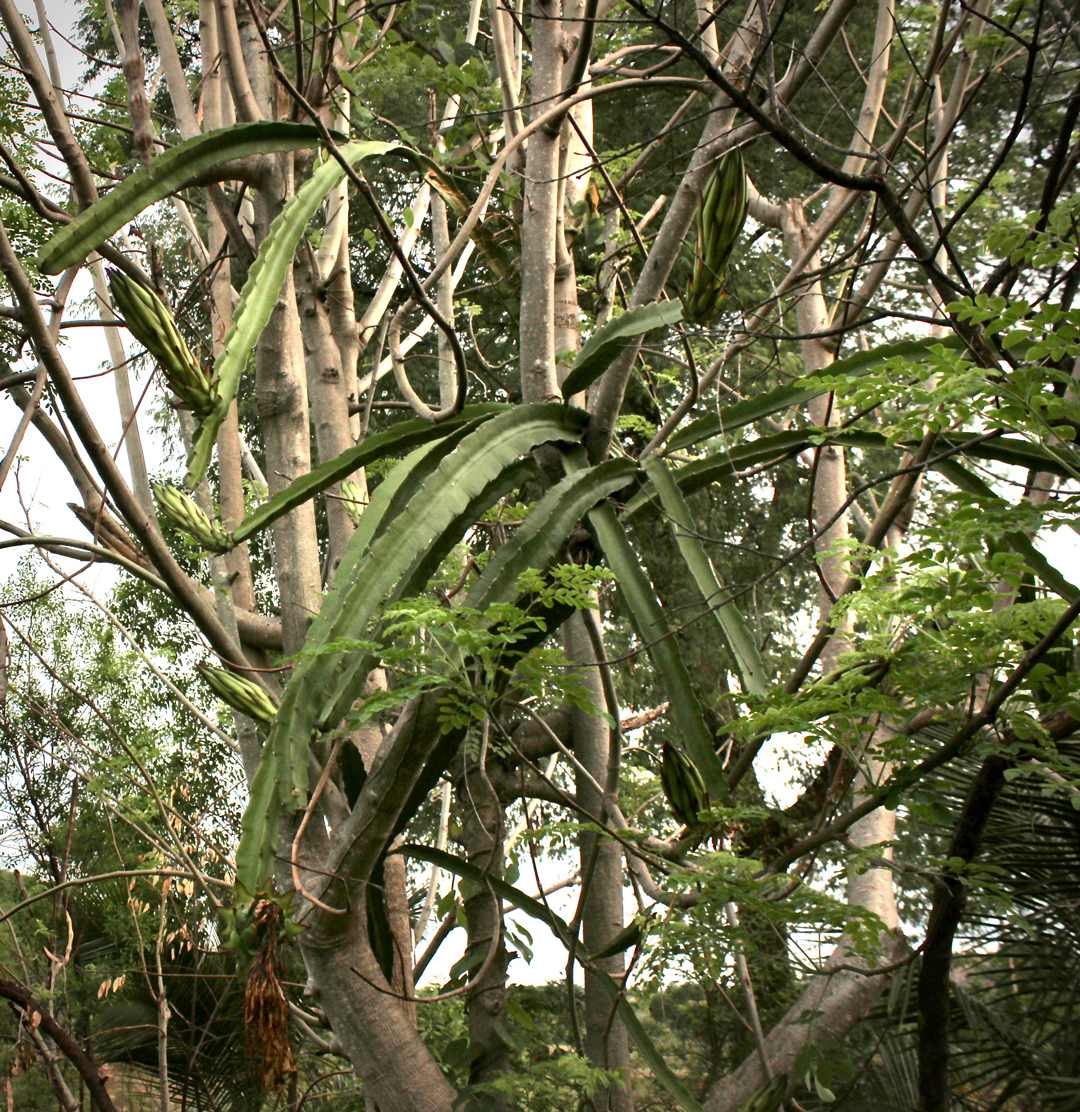
Inefficient But Effective: What a Dragon Fruit Experiment Taught Us About Trusting Nature
It is officially happening. After almost two long years of waiting, nurturing, and watching, our dragon fruit plants have started flowering, and the very first fruit is finally visible.
By conventional farming standards, a two-year timeline for initial fruiting is considered highly inefficient. Modern metrics urge us to demand immediate results, maximum output, and hyper-speed growth. But sometimes, you have to take a step back to move forward sustainably—a truth that applies just as much to our personal journeys as it does to the soil.
When we started, we chose to bypass the standard industry practice of using rigid concrete or wooden trellis systems. Instead, we decided to experiment with a live trellis: the resilient Moringa tree. We wanted to see what happens when growth is supported by another living thing, rather than an artificial structure.
We planted ten dragon fruit vines to test this symbiotic methodology. The journey hasn’t been a smooth, linear line upward:
- 4 are thriving beautifully alongside their Moringa hosts.
- 3 are still struggling to establish their pace, growing slowly but steadily.
- 3 perished under the weight of two consecutive, punishing summer heatwaves.
While a 40% optimal survival rate isn't an outright commercial success on paper, it provides us with an invaluable proof of concept. It proves that this natural methodology can work—and we can now confidently scale it across our farm with the lessons we've learned.
In life, we often view setbacks or slow progress as failures. But this experiment is a gentle reminder of a deeper reality: true growth requires immense perseverance. It reminds us to stop forcing timelines, to allow things to develop organically, and to trust the process even when the environment gets harsh.
It may not meet the rigid benchmarks of modern efficiency, but building a solid foundation always takes time. It is not about how fast we get there, but how effectively we sustain ourselves along the way.
Now, the best part begins: waiting to taste the very first harvest of that patience.